
The Art of Moderation
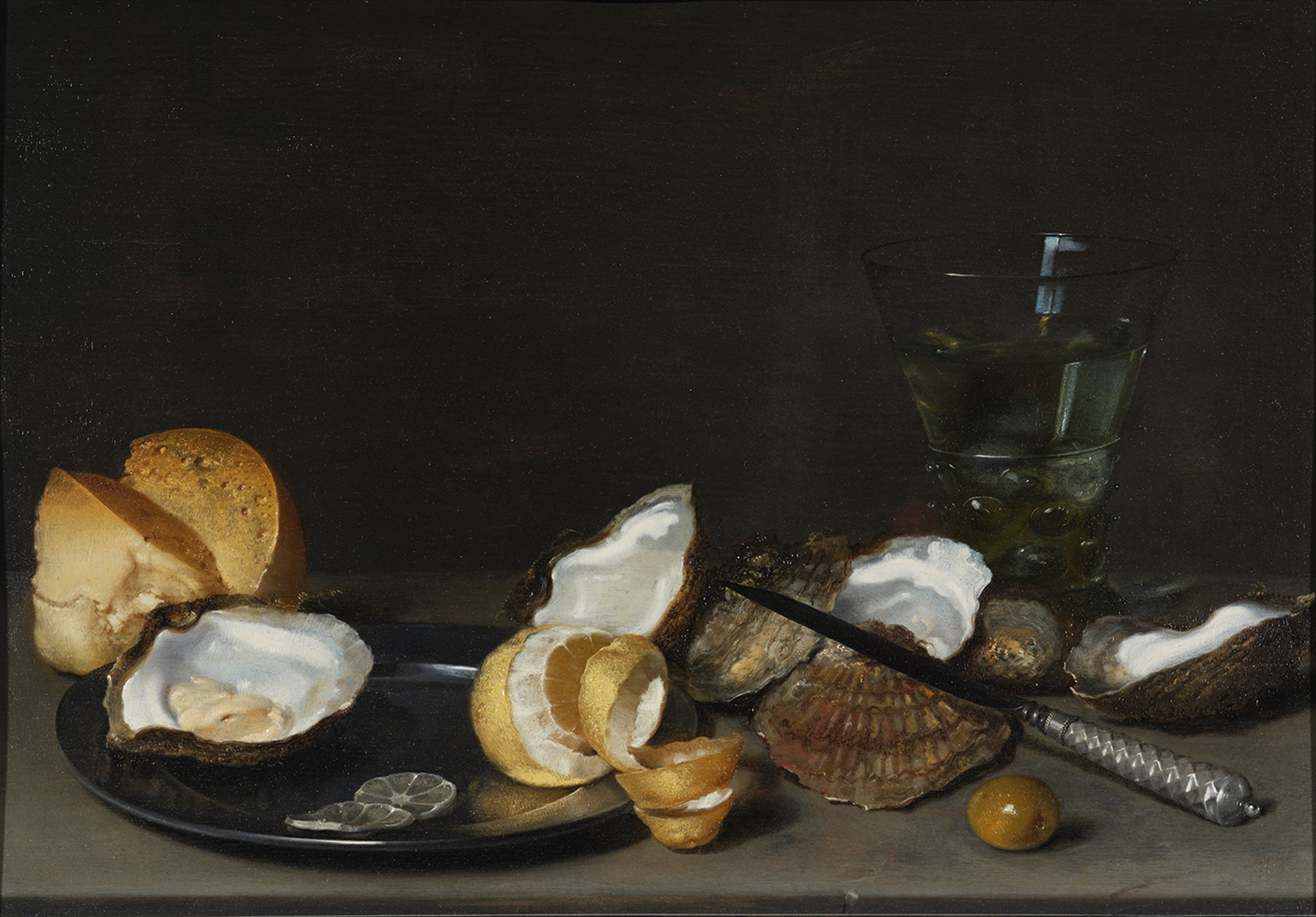
A bread roll, oysters, a cut lemon, a pewter plate, a glass of wine, an olive, and a knife: the selection of objects may seem modest, but the arrangement is remarkably sophisticated and executed with great painterly precision. The pearlescent sheen of the oysters, the rough texture of their shells, the juicy lemon, the crisp crust of the bread, and the gleaming glass reveal the unknown master’s keen interest in different materials and their visual qualities.
Although the artist’s identity remains uncertain, this painting, dating from around 1630, is an early example of the so-called monochrome banketje, a type of meal still life that developed in Haarlem. Unlike the lavish and colourful tables painted by the older generation, this arrangement is characterised by a limited number of objects, a clear composition, and a restrained palette. The careful observation of light, shadow, and reflections gives the scene a remarkably lifelike quality.
Yet this seemingly simple meal also carries a moral message. Oysters were regarded as an aphrodisiac and could symbolise sensual temptation. Lemon juice was drizzled over them to aid digestion, but because of its acidity, the precious fruit was used sparingly. The lemon could therefore be understood as a symbol of moderation, a virtue set against the sensual appeal of the oysters. Still Life with Oysters thus combines the pleasures of the table with a reminder to restrain one’s desires.