
Luxury and Transience
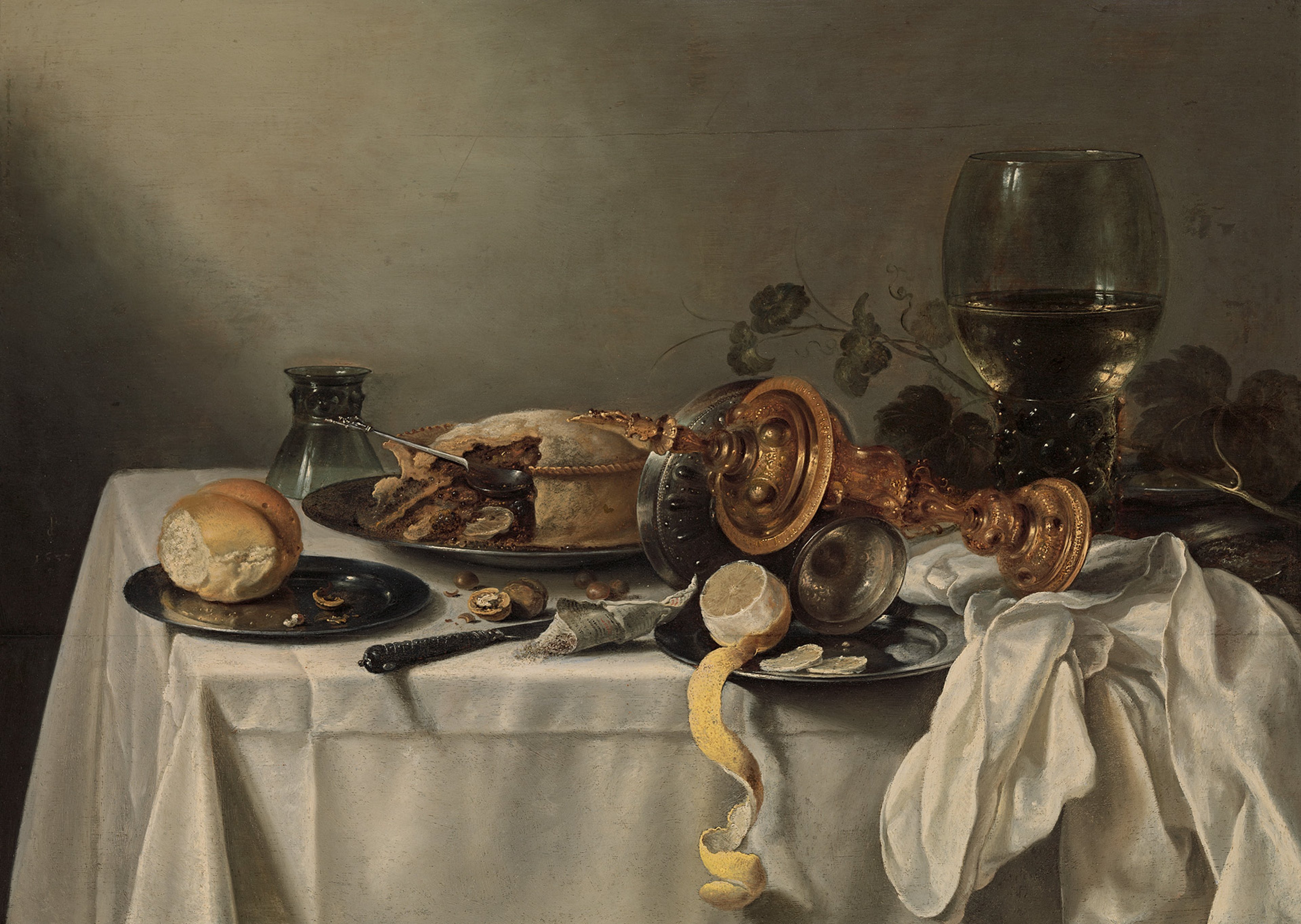
How convincingly can painting imitate reality? In this banquet still life, Pieter Claesz explores the possibilities of trompe-l’œil, the art of creating the illusion of reality. The knife extending beyond the edge of the table appears to project into the viewer’s space, while the silver spoon rests in the cut-open pie. The lemon, with its skilfully cut peel, seems almost to invite the viewer to reach out and touch it.
Claesz makes particularly subtle and sophisticated use of reflections. In the wine glass, the reflection of a window frame can be seen, introducing a light source from beyond the picture and extending the depicted space. Such optical effects reveal how closely the artist observed the conditions of vision, and how precisely he translated them into paint.
Film Recommandation
The Genre of Still Live: The film shows how Claesz skillfully uses deception.
At first glance, the richly laden table speaks of pleasure, prosperity, and the dining habits of the wealthy Dutch middle class in the seventeenth century. Yet behind its seductive appearance lies something more. The lemon can be understood as a symbol of moderation, while the bread and wine allude to the Last Supper, and the reflected window cross points to Christ. Partly consumed foods and overturned vessels also evoke the transience of life.
In this way, Claesz combines the delight of optical illusion with a moral dimension, while at the same time making art itself a subject. The painting invites us to question the evidence of our own eyes.
Film Recommendation
Culinary Elements: What does the food on the table tell us about the time in which it was painted?