
Art Preserves What Time Takes Away
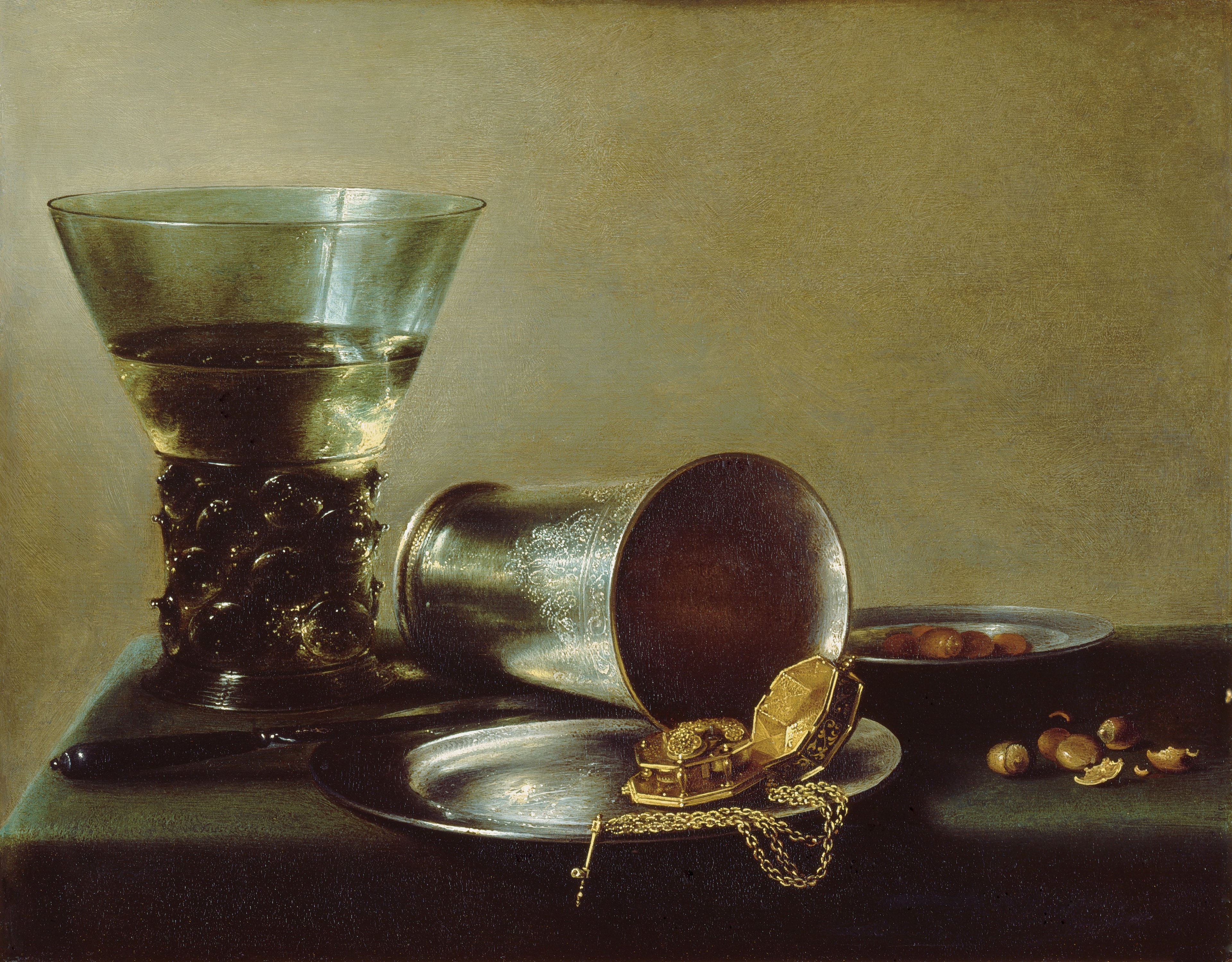
The term vanitas still life derives from the Latin word vanitas, meaning empty appearance and vanity. Such still lifes are an immediate reminder of the transience of life and the fleeting nature of all earthly things.
Arranged on the table are a violin, a dancing-master’s fiddle (pochette), books, a mirror, an hourglass, a vessel containing charcoal and a human skull. In the seventeenth century, books played an important role in preserving knowledge from being forgotten. The instruments represent music, whose sound quickly fades away. The mirror alludes to vanity and self-reflection, while the hourglass and skull serve as unmistakable reminders of time running out and of death.
Together, these objects convey the prevailing mood of the Baroque era: everything is fleeting, nothing lasts. At the same time, the painting offers a paradoxical perspective. For it is precisely art that has the power to preserve what is transient. The still life thus recalls the ancient saying Vita brevis, ars longa (Life is short, art endures).